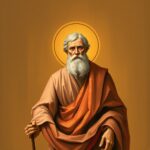
Peter, also known as Simon Peter, is one of the most recognizable figures in the New Testament. His life story reads like a narrative of rise, failure, repentance, and restoration, culminating in a leadership role that helped shape the early Christian church. The Bible presents Peter’s life, miracles, and lessons not just as isolated episodes, but as a coherent arc that reveals the character of Jesus, the power of faith, and the call to live as followers who witness and participate in God’s work in the world. This article surveys a wide range of Bible stories about Peter—from his initial call to his influential ministry after Pentecost—emphasizing the enduring messages each episode offers for believers today.
The earliest scenes of Peter’s life place him in a familiar setting for many readers: a Galilean fisherman standing at the nets, awaiting the next day’s work. Peter’s vocation as a fisherman serves as a symbolic backdrop for his later role as a “fisher of men.” The Gospels recount the moment when Jesus encounters Peter and his brother Andrew by the Sea of Galilee. After a night of unsuccessful labor, Jesus tells them to cast their nets again, and this time their nets fill with a miraculous abundance. In awe, Peter responds with humility and faith, recognizing the divine presence in the encounter. The invitation that follows—“Follow me, and I will make you fishers of men”—marks the formal call to discipleship for Peter and his brother.
This moment is often called the call of Peter, but it is also the moment of transformation: a fisherman becomes a steward of the gospel. The name “Peter” itself—from the Aramaic word Cephas, meaning “rock”—appears as a symbol of the steady leadership he would assume in the decades to come. Yet the sequence also shows a human, imperfect leader who will learn the cost of following Jesus, including moments of pride, wavering faith, and eventual steadfastness.
First Miracles and Faith: The Early Public Ministry of Peter
The Miraculous Catch and the Call
One of the most striking early stories that frames Peter’s life is the miraculous catch of fish in Luke 5:1-11. When Jesus stood beside the lake and taught the crowd from Peter’s boat, he directed the fishermen to cast their nets again. Although their experience told them the night had produced nothing, they did as Jesus asked and found themselves with a catch so large that their nets began to tear. Peter’s response—humility mixed with awe—led to his famous declaration: “Go away from me, Lord; I am a sinful man!” Jesus’ reply, “Do not be afraid; from now on you will fish for people”, marks both a theological shift and a practical mission. From that moment, Peter becomes an active participant in Jesus’ program to build a community of learners who would carry the message after him.
Another emblematic episode is Peter’s attempt to walk on the Sea of Galilee with Jesus. In Matthew 14:28-31, Peter asks Jesus to bid him come, and Jesus invites him onto the water. For a moment Peter steps out in faith, but fear overtakes him when storms arise, and he begins to sink. Jesus reaches out to save him, gently chiding, “You of little faith, why did you doubt?” This story is not merely about a miracle; it is a parable about the dynamics of faith and the human tendency to doubt in the face of danger. It invites readers to trust in Jesus’ power even when circumstances appear daunting.
Healing and Presence: Peter’s Early Authority
Peter’s leadership begins to solidify as signs of God’s power accompany the apostolic ministry. In the early chapters of Acts, we encounter accounts of Peter’s shadow healing the sick (Acts 5:15) and his role in healing the lame and enabling others to testify to God’s grace. These moments underscore a central theme: the Holy Spirit’s enabling presence in the apostolic ministry. They are not simply wonders to marvel at; they are demonstrations of how God works through the church to bring healing, relief, and transformation to people’s lives.
Pentecost and the Birth of the Church
A watershed moment in Peter’s ministry—and in the life of the early church—occurs at Pentecost, described in Acts 2. When the Holy Spirit descends on the apostles, they begin to speak in other tongues, and a crowd gathers from many nations. Peter steps forward with boldness and proclaims the core message of repentance and baptism in the name of Jesus Christ for the forgiveness of sins. The result is extraordinary: about 3,000 people are added to the church that day, and the community forms a new social and spiritual reality anchored in the risen Jesus. Peter’s sermon at Pentecost models the integration of proclamation, invitation, and community life, showing how the gospel breaks through cultural and linguistic barriers to invite all people into God’s new family.
The tone of this chapter emphasizes the transformative power of a single leader’s witness when empowered by the Spirit. It also highlights the shift from Jesus’ immediate ministry to a broader apostolic mission. Peter’s leadership is on full display as he interprets Jesus’ life and resurrection in light of the scriptures and calls listeners to respond with faith.
Acts of Healing and Resurrection: Dorcas and Aeneas
Aeneas: Healing a Faithful Brother
In Acts 9, we read about Peter’s role in healing Aeneas, a man who had been bedridden for eight years. Peter’s presence and bold proclamation—“Jesus Christ heals you; get up and roll up your mat”—results in Aeneas rising, and this miracle becomes a powerful sign that spreads beyond the local community. The healing of Aeneas demonstrates the way God’s grace works through Peter to restore dignity and life to individuals who appear beyond hope. It also catalyzes a broadening of the gospel’s reach as people in nearby towns hear of the miracle and respond with faith.
Tabitha (Dorcas): A Resurrection of Compassion
Following Aeneas, the narrative moves to Tabitha, also known as Dorcas, a woman noted for her deeds of mercy and acts of charity. When Tabitha dies, the community gathers; Peter is summoned, and through prayer and the Spirit’s power, Tabitha is raised to life (Acts 9:36-42). This story is often read as a powerful reminder that compassion and community care are integral to the gospel’s witness. The revival of Tabitha demonstrates that God’s compassion can animate both miraculous signs and practical acts of love that meet everyday needs.
Cornelius and the Gentile Mission: A Turning Point
A pivotal chapter in Peter’s life unfolds in Acts 10, when a Roman centurion named Cornelius receives a vision from God, challenging Jewish purity boundaries and inviting Peter to preach to Gentiles. The encounter forces Peter to rethink his assumptions about who belongs in God’s people. The revelation comes in a vision: God shows Peter that what God has made clean, do not call common, and the Holy Spirit fills Gentiles as they hear and believe. Peter’s subsequent visit to Cornelius’ house becomes a landmark moment, signaling the inclusion of Gentiles into the church’s mission without requiring them to adopt Jewish ceremonial practices first. The event culminates in the question: Who can withhold baptism from those who receive the Spirit? The answer is explicit: salvation is for all who believe in Jesus Christ, regardless of their ethnic background.
Vision and Conversion: The Road to Caesarea
Peter’s vision of unclean foods and its interpretive leap challenge him to interpret purity laws through the lens of God’s universal grace. When the Holy Spirit falls on Cornelius and his household, Peter acknowledges the propriety and necessity of sharing the gospel widely. This moment marks a broader mission: the church is to become a global movement that transcends traditional boundaries by embracing people from every nation who believe in Jesus.
Persecution, Imprisonment, and Deliverance
Peter’s mission is not without danger. The early church faces persecution under rulers who threaten the fledgling movement. In Acts 12, Peter’s experiences include imprisonment by King Herod, a night of miraculous escape, and the astonishment of those who witness it. The imprisonment and subsequent release of Peter reveal a pattern: prayer, bold testimony, and divine intervention work together to protect the church, sustain its courage, and advance its mission despite trials. The narrative also underscores the community’s role in supporting and praying for their leaders, reminding readers of the mutual care that sustains a church under pressure.
Denial and Restoration: A Human Journey toward Maturity
The Denial: A Moment of Weakness
Even as a leader, Peter is not immune to fear and failure. During Jesus’ arrest and impending crucifixion, Peter denies knowing Jesus three times (Matthew 26:69-75). The episode is a stark reminder that even reliable leaders can falter under pressure and temptation. Yet for Peter, the story does not end in shame; it becomes the opening to renewed grace and a pathway to growth.
After the resurrection, Jesus meets Peter by the Sea and reiterates his call with a poignant question and instruction: “Simon, son of John, do you love me?” Jesus commissions Peter to “feed my sheep,” restoring him and reestablishing his leadership role in the church (John 21:15-19). This restoration is not merely personal reconciliation; it is a vocational renewal that empowers Peter to shepherd the community with wisdom, humility, and courage. The encounter carries a profound message for readers: even after failure, God offers forgiveness, restoration, and a renewed purpose for service.
Across the book of Acts and the Epistles, Peter emerges as a central figure in shaping the faith community. He is present at key turning points—the day of Pentecost, the healing of the lame man, the reconciliation with Gentiles, and the governance questions that arise as the church grows beyond Jewish boundaries. While other leaders contribute to the church’s development, Peter’s voice often anchors crucial decisions and clarifies the gospel’s scope. He challenges inequities, exercises pastoral authority, and models a life open to the Spirit’s improvisation. The apostle’s leadership is not about control; it is about stewarding God’s presence and guiding communities toward faith, holiness, and mission.
Letters of Peter: Living the Message in a Complex World
Two letters attributed to Peter—1 Peter and 2 Peter—offer a reflective extension of the Peter narrative into early Christian ethics, hope, and perseverance under pressure. They address issues such as suffering, faithful living, the danger of false teachers, and the call to holiness. While these texts are not narrative miracles, they serve as a continuation of the Peter story by translating eyewitness experiences of Jesus, Pentecost, and missionary challenge into practical guidance for believers living in diverse and often challenging contexts. They remind readers that the apostle’s influence endures in the explicit instruction to trust God’s promises, to grow in virtue, and to hold fast to the truth even when persecution or confusion arises.
What We Learn: Practical Lessons from Peter’s Life
From Peter’s multifaceted journey, several enduring lessons emerge—lessons that remain relevant for readers today:
Call and response: A genuine encounter with Jesus invites a life-changing response. Peter’s journey shows that discipleship begins with a call and unfolds through obedience, courage, and dependence on God.
Faith amid doubt: Walking on water and other moments reveal that faith is a dynamic act—often accompanied by fear—yet strengthened by Jesus’ presence and invitation to trust.
Humility and leadership: Peter’s flaws—temptations to boast or deny—underscore that meaningful leadership grows through repentance, accountability, and a willingness to serve others in love.
God’s inclusivity: The Cornelius episode demonstrates that the gospel’s scope is universal, inviting people from every nation and background to belong to God’s people through faith in Christ.
Power through the Spirit: The miracles and bold preaching associated with Peter’s ministry emphasize that the Spirit equips believers to witness, heal, and transform lives beyond human strength alone.
Restoration and purpose: Even failures do not disqualify a person from serving God. Restoration through grace can renew a calling with fresh purpose and hope.
Conclusion: Peter’s Enduring Legacy
The Bible’s stories about Peter present a tapestry of vocation, miracles, trials, and teachings that have shaped Christian thought and practice for centuries. From the humble beginnings as a fisherman to the bold proclamation at Pentecost, and from moments of doubt to moments of divine deliverance, Peter’s life embodies a core Christian truth: God works through imperfect vessels to accomplish remarkable purposes. The apostle’s testimony—woven through narratives of calling, healing, inclusion, and perseverance—offers readers a template for faith that is active, resilient, and oriented toward the world’s healing and redemption. As you read Peter’s stories, you are invited to consider your own response to Jesus’ call, your openness to the Spirit, and your readiness to participate in God’s ongoing work in the world.